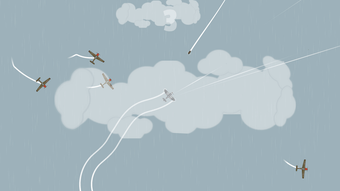
Planes Attack: Quick, score-focused arcade shooting for short sessions
Planes Attack by SRS Games is an indie arcade shoot 'em up that tasks players with defending the skies with a fighter plane. Players dodge missiles and destroy waves of enemies to chase high scores in short, reflex-driven sessions. Key details include basic flight controls, compact installer under 150 MB, 64-bit Mac compatibility, and modest RAM requirements. The game targets casual players and retro-shooter fans who want immediate score-based challenges and achievement hunting.
What kind of game is this and how it frames play?
The game is an arcade shoot 'em up built around a single core loop: survive waves of attackers and improve your score. It leans into competitive, reflex-focused runs rather than story or campaign progression. Competitive features include a Global Leaderboard and Steam Achievements, which steer player intent toward repeated plays and score optimisation instead of long-form objectives.
Does it support multiplayer, and what do mechanics demand?
Multiplayer is not part of the design; play is strictly single-player and score-driven. Core mechanical demands come from pattern recognition and avoidance:
- enemy waves that change formation
- incoming missiles that require spatial positioning
- destroying units to increase score and combos
Those elements keep short sessions tense and focused on moment-to-moment execution rather than loadout management.
What does the game look and sound like?
Visuals and audio keep the experience economical. The art direction is minimalist, reducing distracting detail so enemy movement reads clearly, while a peaceful background soundtrack supports concentration without overwhelming in-game cues. Menus and HUD elements favour clear score readouts and immediate feedback, which helps when players jump into repeated short runs.
How approachable is the start and progression experience?
Onboarding is minimal and the learning curve stays shallow, matching the casual intent. Community notes describe the title as a compact time-waster and many players find its achievement set straightforward to complete, which makes initial sessions immediately rewarding. That approach supports quick gratification but limits the depth available for prolonged mastery over months of play.
Which players and other titles does it resemble?
Its rhythmic, short-run design places the game alongside classic arcade shooters where pattern reading and score pursuit are central, for example Galaga-style experiences. Players who enjoy quick, repeatable victories and climbing leaderboards will find familiar territory. Those seeking narrative depth, long campaigns, or cooperative play should look to other genres; this title privileges compact, high-frequency sessions.
In summary, a compact score-chaser well suited to quick sessions
In summary, the game suits players who prefer rapid, repeatable runs and immediate score feedback rather than extended campaigns or social competition. It rewards reflexes and pattern learning, making it a dependable diversion between longer tasks. Completion-minded players and fans of short arcade loops get the most value, while players after narrative depth or cooperative modes will find its scope limited.